
Picture your 2027 planning meeting. The revenue goal went up again, outbound isn't booking enough meetings, and someone suggests the obvious fix: buy more leads. Before anyone signs off, open your CRM and filter for closed lost. You might find a few hundred people who already know your name and haven't heard from you in a year.
Sarah Shepard, StringCan Interactive's COO and my co-author on the Revenue Rewired book, pushed me hard on this one during the episode. You'll come away knowing why a single closed-lost stage keeps your sales data cleaner than splitting it up, how lead scoring can point you to the lost opportunities worth reopening, and how to run a small "not now" audit with five to ten contacts before you commit real money to it.
This post is based on Episode 80 of Revenue Rewired | Finding Hidden Revenue in Your Closed Lost Pipeline. If you'd rather listen than read, find the full episode on Apple Podcasts, YouTube, Spotify, or Amazon. It's worth your time.
Why Would an Agency Tell a Client to Spend Less on Leads?
Because the client already had a pile of leads nobody was working. They came to us wanting a much bigger marketing budget. Inside their HubSpot account we found hundreds of closed lost deals that hadn't been touched since the day they were marked lost, and some had been sitting there for over a year.
About 70% said timing and roughly 15% said budget. Take that with some salt, since "timing" is what a prospect says when they want the rep to stop calling. Either way, these people had raised their hand once already.
So we recommended a smaller budget than they'd planned, with a little more for paid media where they were leaving leads on the table, and a plan to restart conversations with people already in their CRM. They weren't thrilled at first and came around once they saw the reasoning.
We'd run this play before. Some lost buyers had gone with a cheaper or faster competitor and found the grass wasn't greener. What came back sounded roughly like this: we've been disappointed, we were thinking about switching, and we weren't sure you'd want to hear from us after we said no. A couple of those became significant opportunities.
Should You Split Closed Lost Into Separate Stages?
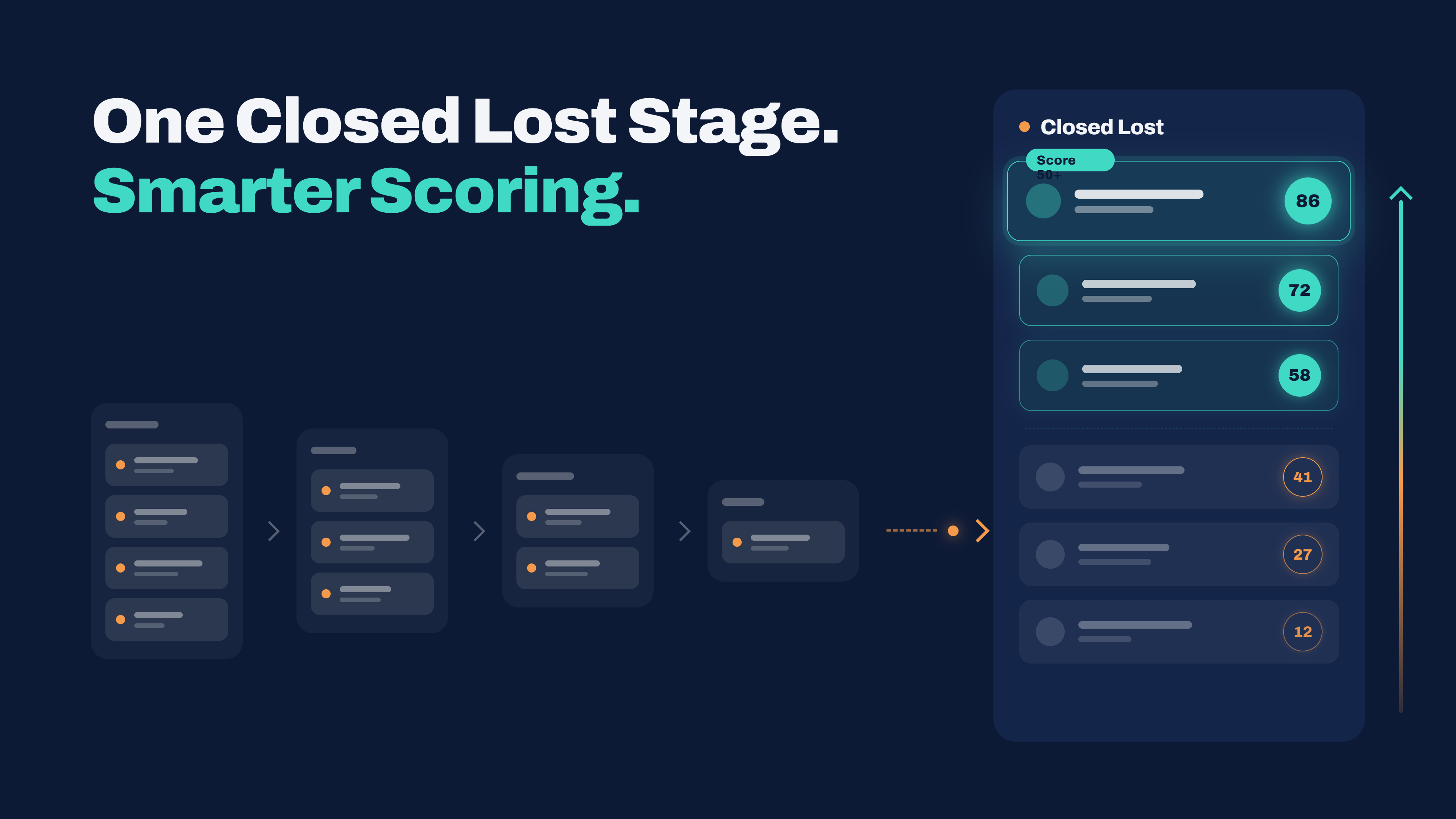
Sarah pitched a "not yet" stage, so a prospect with a real reason doesn't get lumped in with one who ghosted. It's kinder to the sales team's morale, too. I said no. I've worked in hundreds of client CRMs, and every new option hands a busy rep another way to file things differently. Reps are paid to close, so tidy data rarely wins.
Keep one closed-lost stage and let lead scoring do the sorting. HubSpot scores typically run from negative 100 to positive 100, so you might flag anything at 50 or above. Build a workflow that watches for high scores landing in closed lost, and use AI to help decide who to call first.
The other fix is the moment a deal dies. Most reps send a polite "sorry to hear that" and disappear. A curious rep asks one honest question by email or on a quick call and usually gets a better answer than "timing."
Why Is Nobody Following Up?
Usually because the deal feels finished. You already paid to get that person into your pipeline, plus every hour your team spent nurturing them, so one revived deal is revenue nobody planned on. A "just following up, hope all is well" email wastes all of it.
I've seen it done well as a car buyer. When I've told a dealership I bought somewhere else and explained why, the ones I respected checked back around the 36-month mark to ask if I was shopping again. The ones I can't stand reach out after a bad experience and act like it never happened.
How Do You Run a "Not Now" Audit?
Don't open the filter and start scrolling. Without a reason to look, every other deal starts to seem promising, and you end up blasting people and collecting unsubscribes. Try this order instead:
- Start with your goals and ideal client profile, then map how buyers enter and leave your funnel, including the ones who said not now.
- Filter for deals lost 12 or more months ago that you should have won, beginning with timing as the stated reason.
- Work right to left, which was Sarah's idea. Start with the deals that got closest to signing, and if something they wanted has since launched, tell them.
- Pick five to 10 contacts and confirm they still work there. We've watched teams research a whole list and get back a pile of bounces.
- Write each message from their real history with you.
If the last conversation ended on good terms, there's almost no downside, and you'll learn what competitors are doing differently. You'll probably also spot reps logging deals inconsistently or email tracking that was never turned on. Run it once a year at minimum, and quarterly if you're up for it.
Ready to Find the Revenue Already Sitting in Your CRM?
If you're building your 2027 plan and suspect part of your pipeline gap is already in your CRM, start with the Revenue Leak Finder. We'll help you find where deals are going cold before you approve another dollar for new leads.
FAQ
Q: Should I add a "not yet" or "ghosted" stage to my sales pipeline?
A: Keep one stage for every lost deal. Extra options give reps more ways to categorize deals inconsistently, so put the effort into capturing a better loss reason and monitoring lead scores instead.
Q: How long should I wait before re-engaging a lost deal?
A: There's no universal answer, but deals lost a year or more ago for timing are a good starting filter. Check the company's current situation before you write, so the message explains why now might be different.
Q: Which closed-lost deals should my team contact first?
A: The near misses, meaning deals that reached your final stages before falling apart. You know they were serious, and they're where you invested the most effort.
Q: Is reviewing closed-lost worth it if we only have a few dozen deals there?
A: Yes, and it's easier. With 20 or 30 deals, you can review every one by hand, while hundreds or thousands need scoring and pruning before outreach makes sense.