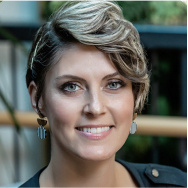
Okay, so. I'm a few short weeks away from a two-month trip to France (yes, I'm working for most of it, but still, France!), and honestly? I've been in a lot of pain. My neck, my hip. My body has been doing this thing lately where it very loudly reminds me that I'm not invincible, and the timing has been, let's say, not ideal.
I hadn't seriously thought about canceling. But the worry of how I was even going to get through the trip had been quietly sitting on my chest for weeks. Like a little cloud that just followed me around everywhere.
I was stuck in that foggy, circular kind of thinking. Not a full spiral, just that exhausting loop where you turn the same problem over and over hoping a new angle appears. Pain. Trip. Pain. Trip. What if. What if. What if. You know the one.
And then I had a catch-up with my friend Jane, and everything shifted.
The Question That Changed Everything
I dumped all of it on her, the way you can only really do with certain people. The pain, the worry, the whole messy tangle of it. And she just listened. Really listened. Let me get it all out. And then, so gently, she asked:
"What would serve you when you get there?"
I just sat with that for a second. Honestly, mic drop, Jane Cebrynski.
Because suddenly, instead of spinning in the problem, I was thinking differently. Could I sort a neck pillow or some extra support for the flight? Could I book a massage when I land, just to give my body a soft welcome? What could I do in the weeks before I leave to feel a little more ready, and what could I line up for when I get back? Jane wasn't brushing off what I was feeling. She was just gently lifting my chin so I could see past it.
It sounds so simple. And I genuinely could not get there on my own.
Why We Go Blind to Our Own Problems
Here's the thing about people who are good at figuring things out: we're really, really good at figuring things out for everyone else. Give us a friend in a crisis, a colleague stuck on something, a problem that belongs to literally anyone other than us, and we're already three steps into the solution before they've finished explaining. It's almost automatic.
But our own stuff? We go completely blind. We get too close to it. Too inside it. We lose all that lovely perspective we hand out so freely to others, and suddenly the same brain that's basically a GPS for everyone around us can't find its way home.
I don't think that makes us broken or bad at self-awareness. I think it's just what happens when proximity takes over. You really can't read a map when your face is pressed against it.
What Jane Did That I Couldn't Do for Myself
Jane didn't swoop in with a list of answers. She just handed me back to myself with a better question. She moved me from "how bad is this?" to "what can actually be done?" and that small shift unlocked everything I already knew how to do.
That's what the really good people in your life do. They don't fix things for you. They remind you that you're someone who knows how to fix things, and then they get out of the way.
If you're someone who's always the first to show up for others, you probably already feel the irony in all of this. You'd know exactly what to say to a friend going through this. The words are right there. You just somehow can't aim them at yourself.
So find your Jane. Seriously. And if you're lucky enough to already have one in your life, please go tell her. She probably has no idea how much that one question meant.
Thanks Jane Cebrynski, I mean it.
Ready for your reframe?
Sometimes you just need someone to ask the right question. At StringCan Interactive, that's exactly what we do. We come alongside growth-minded businesses and help them see what's on the other side of the problems they're too close to. If you're stuck in the loop and ready to find a way through, we'd love to talk. Connect with StringCan Interactive.