
Your product checks every box on the buyer's list, your marketing team did its job, and the prospect still signed with a competitor who's missing features they'll need next year. If you lead sales or own revenue at a mid-market company, you've probably lost a deal like that and walked away blaming price or timing. A lot of the time, the real reason is quieter, and it lives in the days between a form fill and a demo.
Sarah Shepard, our COO and my co-host, and I spent this episode on a live client situation where exactly this happened. You'll come away with a way to tell a single annoying moment apart from friction that actually matters, a kickoff question that surfaces expectations before they turn into broken trust, and a 15-minute exercise for finding the touchpoints in your own sales process that are quietly leaking revenue.
This post is based on Episode 79 of Revenue Rewired | Feelings vs Features and the Sales Experience That Wins or Loses the Deal.
If you'd rather listen than read, find the full episode on Apple Podcasts, YouTube, Spotify, or Amazon. It's worth your time.
Why Would a Buyer Choose the Weaker Product?
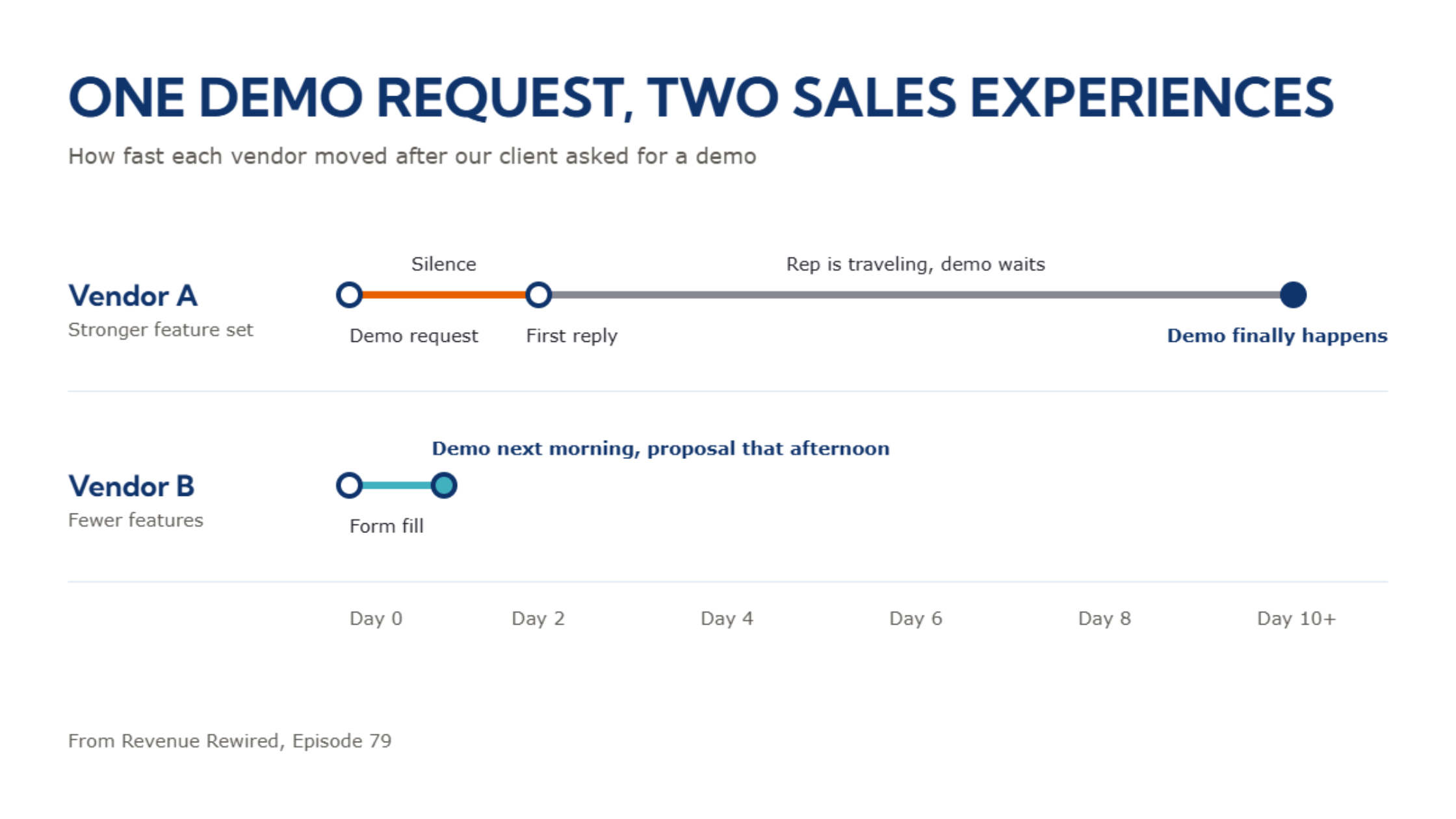
One of our clients is getting ready to make a significant investment in their marketing tech stack, and they narrowed it down to two leading monitoring and measurement platforms. From where I sit, one of them is missing a couple of features this client needs both now and down the road. She was leaning toward that one anyway. When I kept asking why, it came down to how each company sold to her.
The platform with the stronger feature set took two days to respond to her demo request. Because the rep assigned to the lead was traveling, the demo didn't happen for over a week and a half, and every day that passed pushed her closer to the other vendor. That other company got her on a demo the morning after she filled out the form and sent a proposal that same afternoon. Their marketing hadn't outperformed the first company's. In fact, the slower vendor's website did everything right, with clear explanations, good calls to action, and a real sense that this was going to be great.
So the marketing team earned the hand raise, and the sales team handed the deal to a competitor. I'd bet the people who built that website have no idea it happened.
Should a Bad Sales Experience Kill the Deal?
Sarah and I didn't land in the same spot on this one, which is part of why it was a fun conversation to record. My instinct, after years of buying software, is that you rarely talk to the salesperson again once the contract's signed. I care a lot about who my ongoing account manager will be, and I want to meet that person up front. With a tool where I'll sign up and mainly hear about feature updates from the vendor's marketing team, I give the sales side more patience.
Sarah comes at it as an operator. When the communication during a sale is slow or flat, she reads it as a preview of what being a customer will feel like, and she loses trust before the deal is done. She called out that this can turn into confirmation bias. If you run a tight organization yourself, you expect that discipline to show up at every touchpoint, so one miss feels like proof that something's broken higher up.
I want to be clear that I'm not saying a sloppy sales process is acceptable. Picture a big anniversary trip to a special hotel. You've spent real money, you're excited, and the person at the front desk is having a bad day. You didn't do anything wrong, but now the whole stay starts off with a bad taste. If I were consulting for that second software company, I'd tell them they've got every bell and whistle this buyer needs and they're still on track to lose because their sales follow-through is inconsistent.
How Do You Separate One Bad Moment From a Real Pattern?
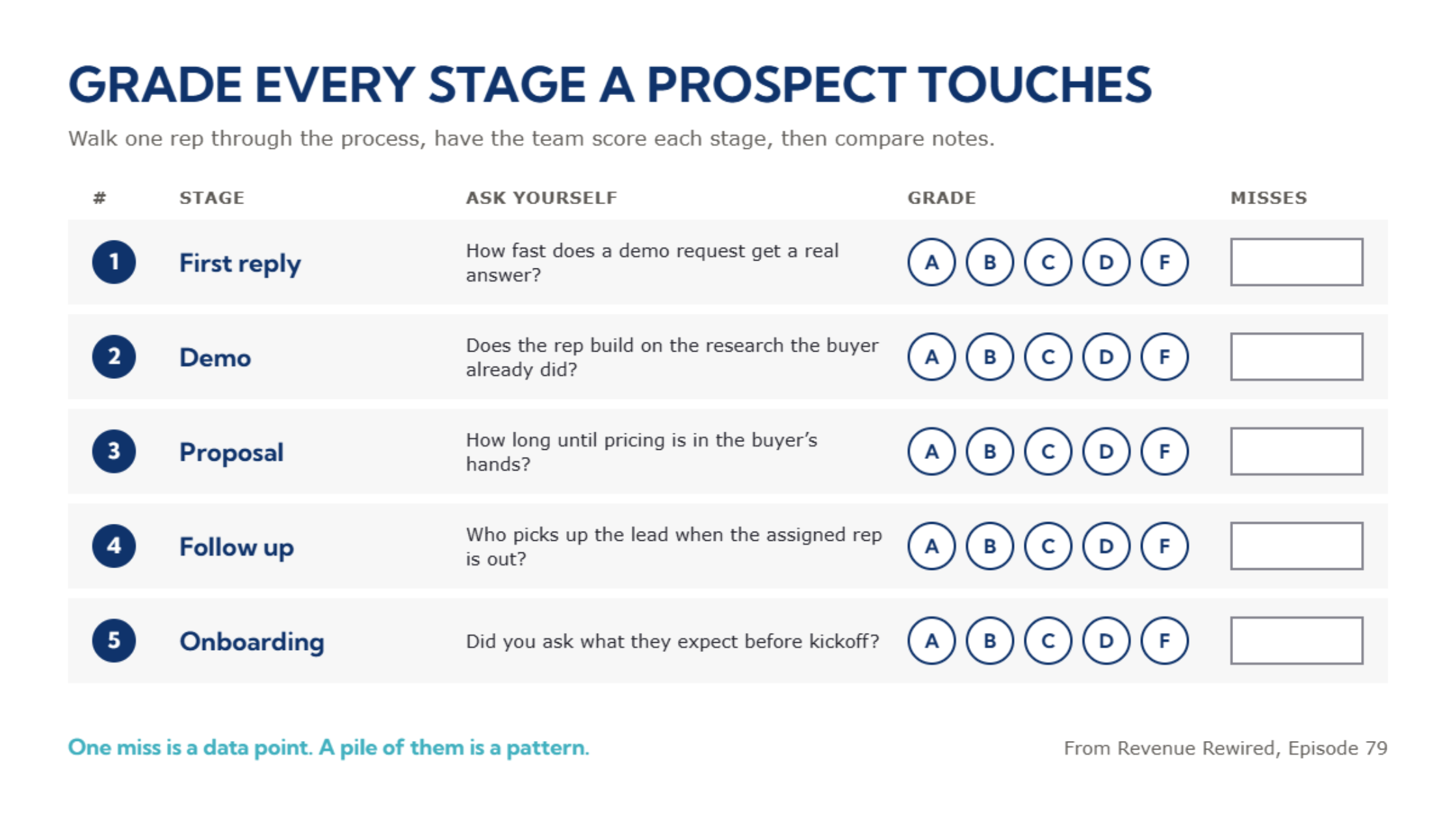
Sarah offered the reframe I keep thinking about. Instead of catastrophizing the first point of friction, treat it as one data point and keep a tally. A slow reply to a contact request is annoying, but on its own it's just one mark. If the marks start piling up across the demo, the proposal, and the follow-up, you've learned something real about what working with that company will look like.
She also made a point about expectations that goes both ways. Buyers often show up with needs they never say out loud, like how fast they expect a reply, and then feel let down when those unspoken needs aren't met. Today's buyers also arrive far more educated than they used to, so it's a bit like two people meeting after taking completely different roads to the same place. A salesperson who doesn't realize how much homework the buyer already did will end up wasting their time with small talk. I've been on calls where I just want answers and the rep burns the opening of the call on the weather and where I went to college, and that's a fast way to lose me.
At StringCan Interactive, we try to get ahead of this in our welcome call before a client kicks off. We ask how they prefer we communicate, what they expect from us, and what five things would need to be true 90 days from now for this to feel like the best partnership they've had. Years ago, one client told us that if his website went down at midnight or on a weekend, he expected us to be fixing it right then. That wasn't our normal process, and because it came up early, we could have a frank conversation about scope before it turned into a fight.
What Does This Look Like Inside Your Sales Team?
When I called a sales manager I know at the vendor I think our client should pick, he explained exactly why her experience had been so rough. I asked if anyone had shared that context with her, and he said they don't talk about that kind of thing. People buy from people, and leaving a buyer to guess at what's going on behind the scenes is how trust slips away over something small.
This gets harder at scale. Companies doing anywhere from $50 million to a quarter billion often have hundreds of reps standing between them and their revenue, and you can't clone your best one. I see businesses pour time and money into whichever department felt weakest, turn sales into an A player, and then discover their branding, marketing, and onboarding are sitting at a B or lower. Think about Starbucks, which feels the same in nearly every country I've visited. Buyers want that kind of consistency from your brand to your website to your rep to onboarding.
Sarah's suggestion for where to start is simple. Grab one salesperson for 15 minutes and have them walk you through every touch a prospect gets, step by step. She also pointed out that the sales conversation and the demo are tangible in a way your brand and marketing materials aren't, and buyers tend to give tangible experiences more weight. Our book club read Unreasonable Hospitality, and it pushed me to think about having a whole team grade each step of the process, compare the scores, and pressure test the gaps.
FAQ
Q: Can sluggish sales follow-through really cost us a deal we should have closed?
A: It can, and we watched it play out with a client of ours. The vendor with the better platform let her request sit for two days and then took more than ten days to get her into a demo. Buyers read responsiveness while they're being sold to as a signal for how they'll be treated as customers.
Q: How quickly should our sales team respond to a demo request?
A: We can't give you a universal number, but the vendor winning our client's business had her in a demo within a day and had pricing to her the same day. Measure your own response time against a benchmark like that. When the assigned rep is out, someone else should be able to pick up the lead so it doesn't go cold.
Q: How can I tell if a vendor's slow response is a red flag or just a bad week?
A: Count the misses instead of judging the whole company on the first one. A single slow reply doesn't say much. Repeated gaps from first reply through pricing and follow-up give you a much clearer picture of the service you'd get after signing.
Q: What should we ask during onboarding so expectations don't get missed?
A: Find out their preferred communication style, what they're counting on from your team, and which five outcomes would make the first 90 days feel like a win. Unspoken expectations are where trust tends to break. Getting them out early also makes it easier to adjust scope before something goes sideways.
Q: What's a quick way to audit our sales touchpoints?
A: Sit down with a single rep for a quarter of an hour and ask them to map out each interaction someone has with your team, from first inquiry to signed contract. You'll usually spot gaps nobody knew were there. For a deeper look, have everyone on the team score each stage separately and then compare notes.
Ready to Find Out Where Your Sales Experience Is Leaking Revenue?
At StringCan, we audit the full path a buyer takes, starting with the first impression your brand makes and running all the way through onboarding, and look for the friction points that cost you deals your product should be winning. Plenty of what we find looks tiny on paper, like a two-day response gap or a rep who skips past the research a prospect has done, and it still decides who gets the contract.
If any of this sounded like your last lost deal, we'd love to talk it through with you. Start by listening to Episode 79 of Revenue Rewired, then connect with me on LinkedIn and tell me what your buyers are running into.