
More calls and emails won't fix pipeline that isn't converting. Here's what to inspect before you double down on outreach volume.
Your outbound numbers looked strong last quarter. Cold email volume doubled. The SDR team added forty more calls a week. Content went out twice as often as the quarter before. Then someone pulled the pipeline report, and qualified opportunities were flat. Maybe worse.
The instinct at that point is to blame execution. Fix the messaging. Push the reps harder. Get more content into market faster. The answer becomes more of the same, just louder.
That's usually the wrong diagnosis. When outreach volume climbs, and pipeline doesn't follow, you're looking at what we call Volume Trap inside the Revenue Rewired framework: activity that multiplies without moving the number that actually matters. More noise doesn't create more signal. It just makes the signal harder to hear.
Direct answer
More outreach rarely fixes a stalled B2B pipeline, because volume was never the real constraint. If quote or meeting volume doubles and qualified opportunities stay flat, the problem usually sits upstream, in targeting, fit, or message clarity, not in how much outbound gets sent. Before adding another sequence, inspect conversion rate at each stage, not just total activity. Don't assume the fix is more reps, more emails, or more content. The primary leak here is Volume Trap, and left alone it burns budget and rep hours on prospects who were never going to convert, while masking the real problem underneath.
What it looks like when more outreach doesn't move pipeline
The pattern shows up the same way almost everywhere we see it. Activity metrics climb steadily on the dashboard: emails sent, calls dialed, posts published, ad spend deployed. Marketing feels busier. Sales feels busier. Everyone can point to more work happening than last quarter.
Pipeline, the actual number that funds payroll, doesn't move with it. Sometimes it inches up slightly and gets credited to the volume increase. More often it stays flat, and the team assumes next quarter's bigger push will finally break through. That's also where Metrics Misfire creeps in. Activity metrics look great while the metric that actually matters, qualified pipeline, doesn't move at all.
Why doubling volume usually just doubles the noise
Here's the part most leadership teams miss. Volume doesn't fix a targeting problem. It multiplies it.
If your ICP definition is loose, or your message doesn't create real recognition in the buyer's mind, every additional email or call just repeats the same miss on a larger scale. You're not reaching more of the right people. You're reaching more of everyone, and the ratio of good-fit to bad-fit prospects in your outreach stays exactly where it was. Conversion rate falls to match the added volume, and net pipeline holds still while your team works twice as hard to get there.
This is why a rising activity number can be a warning sign rather than a good one. A team that's busier without more pipeline isn't underperforming. They're running the same broken filter faster.
The difference between an activity problem and a targeting problem
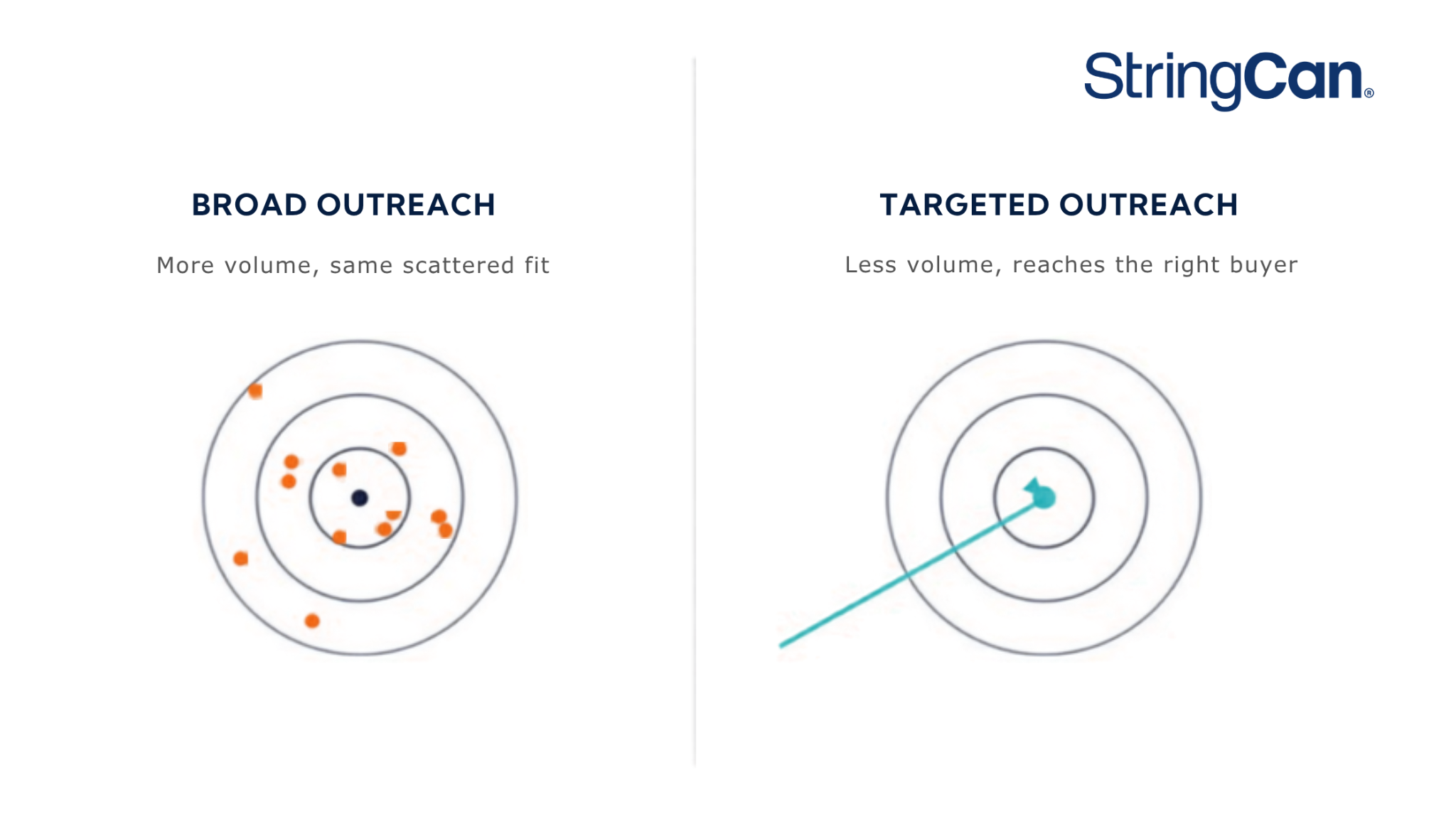
An activity problem means the team isn't doing enough of the right work. A targeting problem means they're doing plenty of work aimed at the wrong accounts, the wrong titles, or the wrong moment in the buyer's decision.
Most leadership teams default to treating every pipeline shortfall as an activity problem, because it's the easier fix to authorize. Add headcount. Buy a list. Increase send volume. It feels like progress because the activity numbers respond immediately.
A targeting problem doesn't respond to more effort. It responds to a narrower, sharper definition of who you're actually going after and why your message should matter to them specifically. That's a strategy conversation, not a volume conversation, and it's uncomfortable because it usually means doing less outreach to more of the right accounts instead of more outreach to everyone.
What to inspect before adding another outbound sequence
Before authorizing more volume, pull the numbers at each stage instead of just the top-line activity count.
- What's your reply or response rate compared to six months ago
- What percentage of outbound-sourced meetings actually match your ICP
- Where in the sequence does interest drop off: the first touch, the third, the follow-up after a demo
- Has your message changed meaningfully in the last two quarters, or just the volume behind it
- Are you measuring meetings booked, or meetings with the right buyer at the right company
If reply rates are falling while volume rises, that's not a coincidence. That's the targeting problem showing up in the data before anyone said it out loud.
What to fix before the next round of outreach
Fix the filter before you fix the volume. Tighten the ICP definition to something specific enough that your team can say no to a prospect that technically fits but clearly isn't the right buyer. Rebuild the message around the actual business problem your best clients had before they called you, not a generic value proposition that could describe five other vendors. That's the Align stage of Revenue Flow: fix the target and the message before you activate more behind it.
Only after that filter is sharp does adding volume make sense. At that point, more outreach compounds a system that's already converting instead of multiplying one that isn't. If this pattern is showing up in more than one place across your growth system, that's usually the kind of gap a Growth System Session is built to map.
Take the Revenue Leak Finder
If your outbound activity is climbing and pipeline isn't following, take the Revenue Leak Finder. If your result feels familiar, send it to me, and I'll tell you where I'd inspect first.
FAQ
Why isn't more outreach creating more B2B pipeline?
Because volume was never the actual constraint. If your targeting or message is off, adding more emails or calls just repeats the same miss at a larger scale. Conversion rate drops to offset the added volume, so net pipeline holds flat while your team works harder to get there. Fixing the filter matters more than adding fuel.
What is the Volume Trap in the Revenue Rewired framework?
Volume Trap is one of the five revenue leaks Revenue Rewired identifies: activity that increases without a matching increase in qualified pipeline. It shows up as more emails, more calls, more content, or more quotes going out, with the same or worse conversion behind it. The activity looks productive. The revenue outcome tells a different story.
How do you know if a pipeline problem is volume or targeting?
Look at conversion rate by stage, not total activity. If reply rates, meeting-to-opportunity rates, or win rates are falling as volume rises, that's a targeting or message problem, not a volume problem. A true volume shortfall shows steady or improving conversion with too few total attempts. Falling conversion alongside rising activity points somewhere else entirely.
What should we fix before adding more marketing activity?
Start with the ICP definition and the message built around it. If your team can't clearly say who you're targeting and why your message should matter to that specific buyer, more volume will just spread a weak filter across more prospects. Sharpen the filter first, then scale the activity behind something that's already converting.